The People Behind Preservation
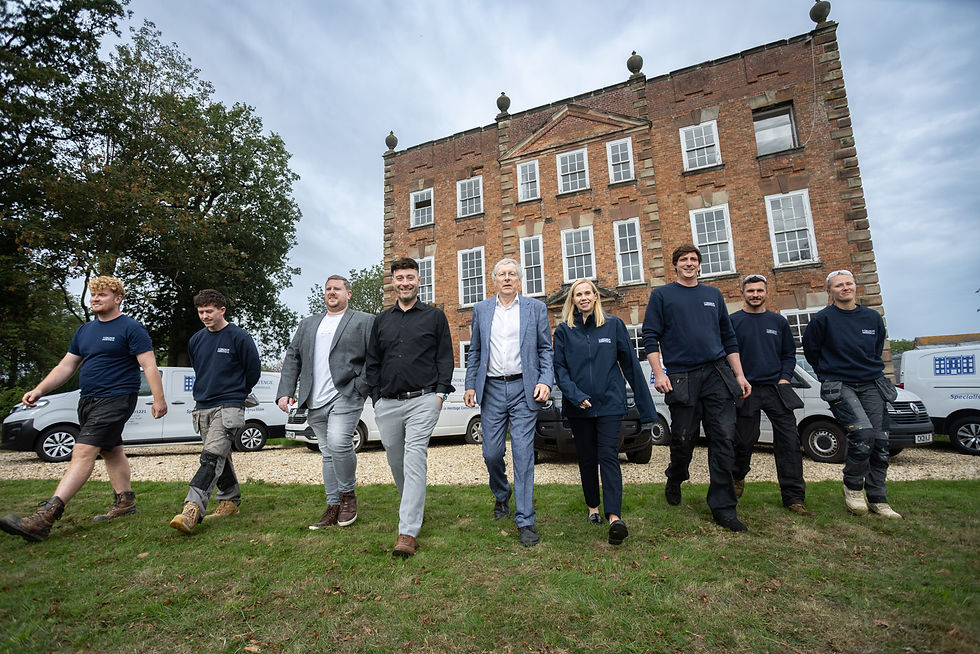
There is a moment in a group photograph when everyone starts walking and the formal pose falls away. People find their own pace. Someone smiles, someone glances sideways and a collection of individuals begins to look like a team.
That is what we like about this photograph of Longnor Heritage. It brings the people into the foreground. Behind the work of caring for old buildings are individuals with different skills, experiences and responsibilities, brought together by a shared concern for what they leave behind.
Historic buildings make a strong impression. We notice their proportions, their materials and the details that distinguish them from their neighbours. The people responsible for their survival are often less visible. Yet every building that remains useful has depended on someone noticing a problem, understanding what it means and taking the trouble to address it.
Preservation is full of those human decisions. How much of an existing component can remain? What caused the damage? How should a repair meet the surrounding material? Who needs to look at it before the next stage begins? The answers emerge through observation, practical knowledge and conversation.
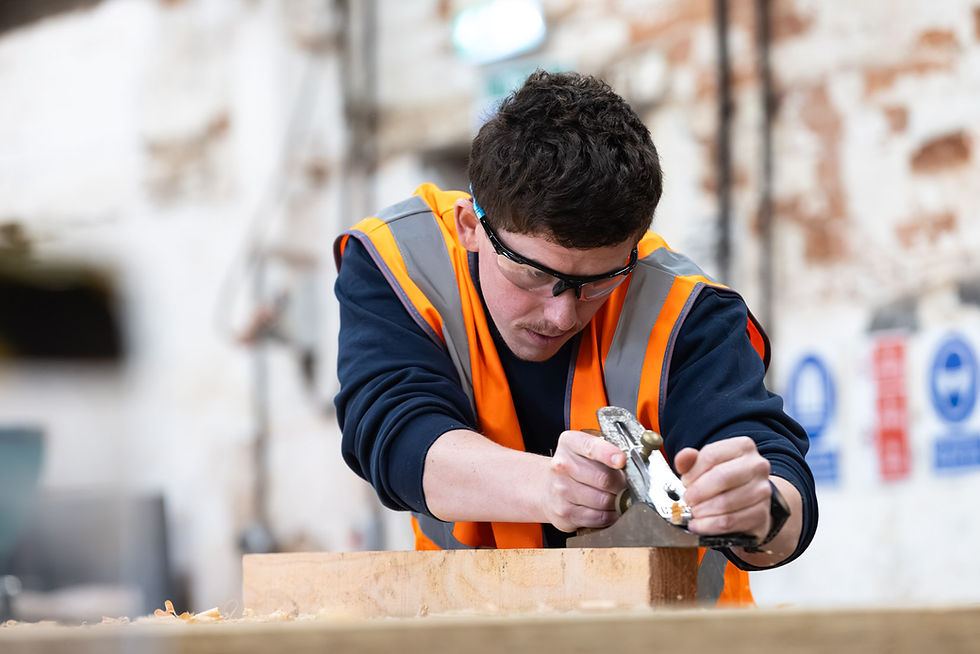
For our team, craftsmanship gives those decisions physical form. A joiner shapes a piece of timber to fit an existing frame. A plasterer prepares a background and works towards a finish. Each brings a particular understanding of materials, tools and sequence. Their work becomes part of the building (sometimes visible and sometimes concealed beneath the next layer).
There is individuality in this. Experienced tradespeople develop ways of looking at a task, organising their tools and checking their progress. They learn where difficulties are likely to arise and which details deserve another look. What can appear effortless from a distance often involves close attention and a series of small adjustments.
The photographs of hands at work capture that concentration. A group photograph adds something else , the relationships that allow individual skill to become a coordinated result
A building connects the work of different trades. A window sits within masonry and meets the internal plaster. The quality of each element matters, along with the way they come together. One person’s finished work becomes the starting point for another. A useful conversation at the right moment can resolve a difficulty before it is built into the job.
That makes listening a practical skill. The person closest to a task may notice something that was not apparent earlier. They need to be able to explain it, ask a question and have their observation taken seriously. Equally, they need to understand how a decision affects the people working alongside them.
At Longnor Heritage, this is the kind of working culture we want to build. We value people who take responsibility for their own workmanship and care about the result beyond their immediate part in it. Pride in a trade and respect for another person’s expertise belong together.
There is also value in knowing when to pause. Existing buildings can reveal information as work progresses. A detail may differ from what was expected; a material may need closer examination. Sound judgement includes recognising the limits of what is known and bringing the right person into the discussion.
Much of this work will never make a striking photograph. Preparation, measuring, protecting adjacent surfaces and checking an assembly are difficult to capture in a single image. They still shape the outcome. Care is often most evident in the things that have been anticipated and quietly dealt with.
The same is true of the people who organise the work. Arranging materials, communicating decisions and coordinating the sequence gives practical skill the conditions it needs. A well prepared job allows tradespeople to concentrate on the task, with a clearer understanding of what is expected and how their contribution fits.
For anyone entrusting a building to a team, these relationships matter. Buildings can hold personal memories as well as architectural interest. Questions about their care deserve clear explanations. People should be able to understand what is being proposed, why it matters and where further investigation is needed. Confidence grows through that exchange.
Within the team, knowledge also needs to move between generations. Someone beginning a trade sees an experienced colleague make a task look straightforward. Learning starts when the reasons become visible (why a measurement is checked again, why a particular tool is chosen and why the next stage must wait).
Our apprentice recruitment is part of our commitment to making those opportunities available. We want new entrants to encounter the full character of the work (the satisfaction of making something accurately, the discipline of preparation and the responsibility that comes with working on an existing building.
An apprentice brings questions that can be valuable to everyone. Explaining a familiar technique requires an experienced person to put years of practice into words. Demonstrating it slowly makes the sequence clear. Giving someone the opportunity to try, check and improve allows knowledge to become their own.
Over time, responsibility grows. The learner begins to anticipate the next task, recognise a problem and contribute an informed suggestion. That progression is important to us. A new generation of artisans needs opportunities to develop judgement as well as the ability to follow instructions.
There is a lasting consequence to these everyday exchanges. The person learning a skill now may use it on buildings for decades to come. They may eventually teach someone else. The attention given to one apprentice can travel far beyond the original workplace.
This gives preservation a human continuity. Earlier generations left buildings and the knowledge needed to care for them. Our generation has to decide what to retain, what to improve and what to pass on. Materials need maintenance; skills need practice; people need the opportunity to learn from one another.
The photograph catches our team between steps. It is an informal moment, but it expresses something we recognise, individuals moving together, each bringing their own contribution.
These are the people behind preservation. Their work is measured in fitted components, repaired surfaces and carefully considered details. Its longer legacy will also be found in the knowledge they share, the people they encourage and the buildings another generation is able to care for.