Made to Last The People Keeping Traditional Craft Alive
Historic buildings survive through the work of successive generations. Someone shaped their timbers, fitted their windows and plastered their walls. Others maintained them, repaired damage and adapted rooms to changing lives. Today’s craftspeople add their own knowledge and labour to that continuity, leaving work that another person will one day care for.
The names of the original makers are often lost. Their decisions remain visible: the proportions of a window, the meeting of two pieces of timber, the sweep of plaster around an opening. These details give a building its character. They also leave today’s crafts people something to understand, respond to and carry forward.
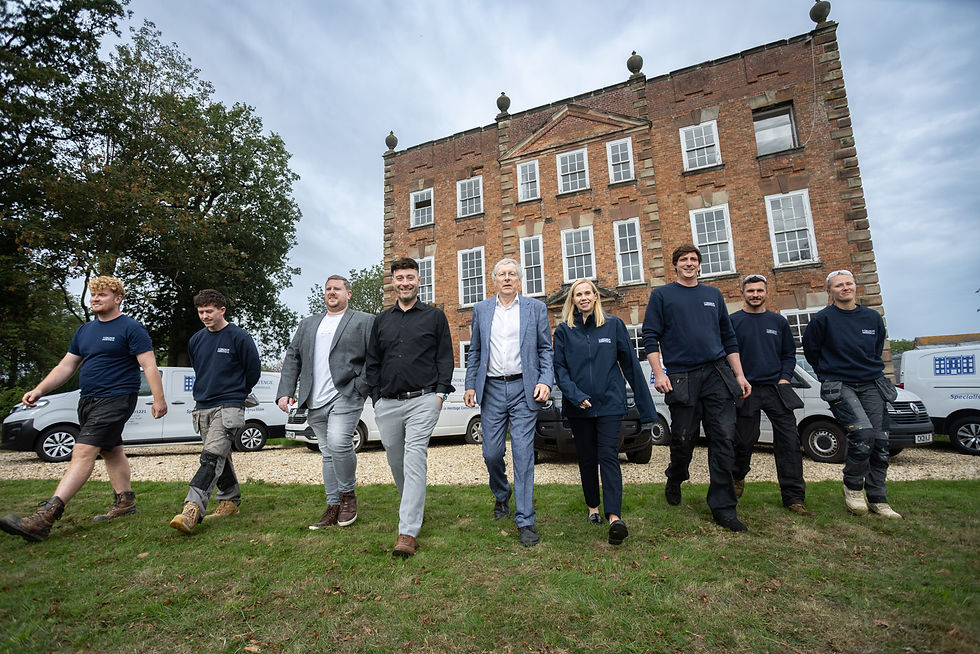
At Longnor Heritage, that connection between past and future gives our work its purpose. We value the materials already in a building and the skill invested in them. Our own contribution depends on people with the knowledge to recognise what remains useful, the ability to make a careful repair and the judgement to know when something new is needed.
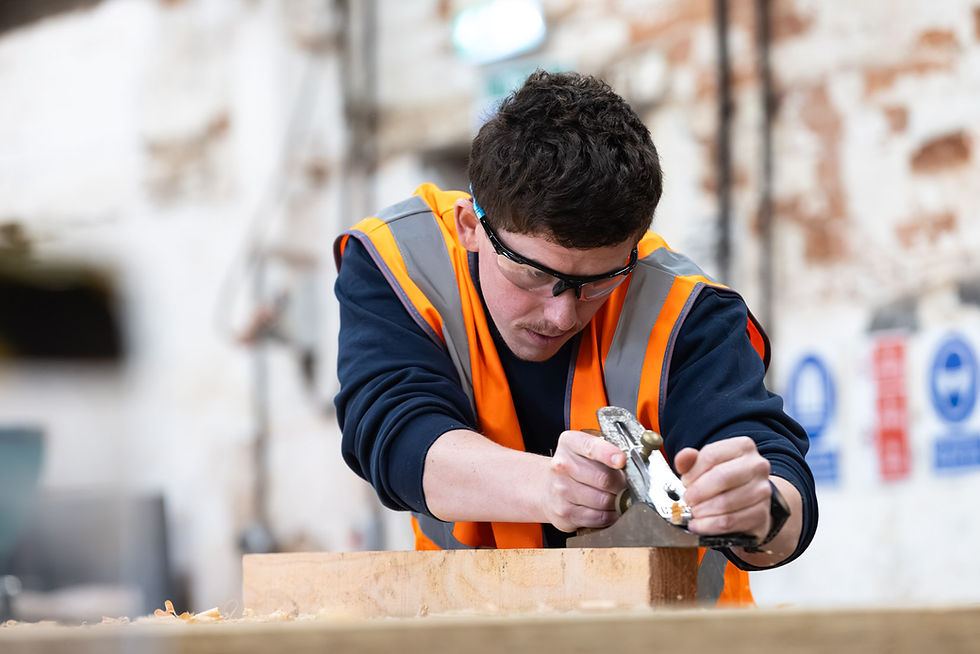
Watch a joiner at the bench and some of that knowledge becomes visible. A plane passes over timber, lifting a fine shaving. A chisel pares a joint. The work moves through repeated cycles of measuring, cutting, checking and adjusting. What looks assured is the result of practice, learning how a tool behaves, how the material responds and how small inaccuracies accumulate.
The advanced skills our carpenters and joiners bring to their work extend well beyond the cut itself. They must understand a drawing as a finished object, then work backwards through the components and connections needed to make it. Setting out establishes the geometry. Careful marking and shaping turn that geometry into pieces that fit.
Complex joinery demands accuracy across the whole assembly. A frame, a shaped component or a meeting between surfaces must work with everything around it. Advanced trade standards recognise this combination of technical understanding, demanding tolerances, problem solving and responsibility for the finished result.
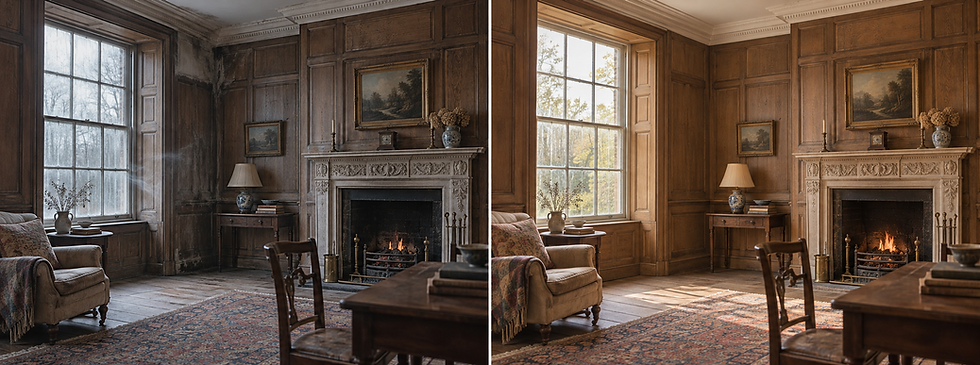
Repair adds the individuality of an existing building. Dimensions may vary; earlier alterations may have changed the original arrangement. The tradesman has to study what is there and work with it. A carefully formed timber splice, for example, depends on preparing the existing piece and shaping its new partner accurately.
Our joinery work brings together skills in timber repairs, splicing, glazing and sash window construction. Each requires attention to the relationship between parts. A window must look right, fit its opening and operate properly. The craftsmanship lies in bringing those requirements together, with care for both the surviving material and the work being added.
Lime plastering involves another kind of precision. Here, the material changes as the work progresses. The plasterer needs to understand the background beneath the plaster, prepare it appropriately and manage the build up of coats. How readily a surface draws moisture, how the mix behaves and when to return to it all influence the outcome.
The final sweep of the trowel is only the most visible part. Behind it sit choices about preparation, thickness, timing and finish. Forming an angle, following a curved surface or meeting existing plaster calls for control of both shape and texture. The hand must respond to what the eye sees and what the material allows.
The breadth of heritage plastering can include repairing curved work and reproducing moulded details, as well as finishing walls and ceilings. Its occupational standards also recognise the importance of allowing time between coats and protecting new work. Those requirements explain why the judgement of an experienced plasterer matters throughout the process.
There is quiet pride in work like this. Much of the preparation will disappear beneath the finished surface. A carefully fitted connection may attract little attention precisely because it belongs so comfortably. The person who made it still knows what went into it: the checking, the adjustment and the decision to spend a little longer getting it right.
That care gives sustainability a concrete meaning.
Retaining usable timber keeps a material in service. Repairing a window preserves the useful parts of an existing assembly. Maintaining a finish can extend its life. Each is a practical way of making better use of resources already shaped, transported and installed.
We want the work we add to be capable of receiving that same care. Someone in the future should be able to understand it, maintain it and make the next repair. Thinking about that person changes the timescale of the task. The handover of a finished job becomes one moment in a much longer life.
Our apprentice recruitment belongs within that longer view. Bringing new people into these trades is part of our commitment to their future. We want another generation to have the opportunity to acquire practical skills, develop confidence in their judgement and find satisfaction in work they can stand back and see.
An apprentice begins with individual tasks: measuring accurately, handling tools safely, preparing materials and learning to check their work. With practice, those tasks begin to connect. They come to understand why a joint is formed in a particular way, why preparation affects a finish and why an experienced tradesman pauses before taking the next step.
Teaching makes that knowledge available to someone else. A demonstration needs an explanation; a first attempt needs patient correction. The ambition is for an apprentice eventually to make sound decisions independently and, in time, to explain those decisions to the person learning beside them.
This is how a new generation of artisans takes its place. They bring contemporary lives, ideas and ambitions to skills developed over centuries. At Longnor Heritage, we want to help make room for that progression: experienced hands doing careful work, new hands learning, and knowledge remaining in everyday use.
The buildings we inherit need people able to look after them. By valuing craftsmanship today and creating opportunities to learn it, we can pass on both the buildings and the means to care for them.