
Heritage Building Restoration and Conservation Specialists

Lime And Masonry
Lime will still be available in a hundred years. Most of what goes on a building site will not.
Working With The Building
Older buildings are not designed to be sealed. They are designed to breathe. Over time, modern materials such as cement and hard renders trap moisture, create stress, and slowly damage the fabric.
Lime and traditional masonry repairs reverse that. They allow the building to manage moisture naturally, move as it needs to, and age in the way it was intended.

Why we keep coming back to it
There is a reason why lime is specified so often, and it is not nostalgia.
Lime is made by burning limestone. There is no patent on it, no single supplier, no profile that can be discontinued and no formulation that can be withdrawn. A lime repair carried out this year can be cut out and redone in 2125 by somebody we will never meet, using material they can still buy from more than one place.
Almost nothing else specified on a modern building site can make that claim. That is what we mean when we say a building should not depend on any one manufacturer — lime is simply the clearest example of it.
Is Lime Appropriate?
-
Listed buildings
-
Buildings in conservation areas
-
Solid wall construction (no cavity)
-
Properties suffering from persistent damp
-
Where cement or modern materials have been used in the past
-
Cracked, failing or missing pointing
-
Damaged brick or stone that needs compatible repair
-
Buildings originally constructed with lime
Part Of The Process
Most projects treat conservation, planning and construction as separate steps, often handled by different people. Lime and masonry repairs are not carried out in isolation, but as part of an overall strategy that respects how the building was made and how it needs to perform.
This means thinking beyond the immediate repair. We consider moisture movement, breathability, structural behaviour and the sequencing of works so that each element supports the next. The result is work that not only looks correct, but performs properly over the long term, reducing the risk of failure, rework and unnecessary cost.

Lime Pointing
We carefully remove hard cement pointing and replace it with breathable lime mortar. This protects the masonry, allows moisture to escape, and prevents long-term damage to brick and stone. Done properly, it restores both the performance and the appearance of the wall.

Lime Plastering
Lime plaster provides a soft, breathable internal finish that helps regulate moisture and improve comfort. It allows walls to dry naturally, reducing damp issues while creating a clean, traditional look that suits historic buildings.
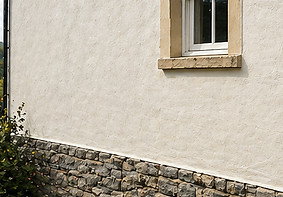
Lime Rendering
Lime render forms a protective outer layer that shields the building while still allowing moisture to evaporate. Unlike modern renders, it moves with the structure and helps prevent cracking, keeping the building stable and dry over time.