
The Conversation That Decides Planning Permission
- Mar 11
- 3 min read
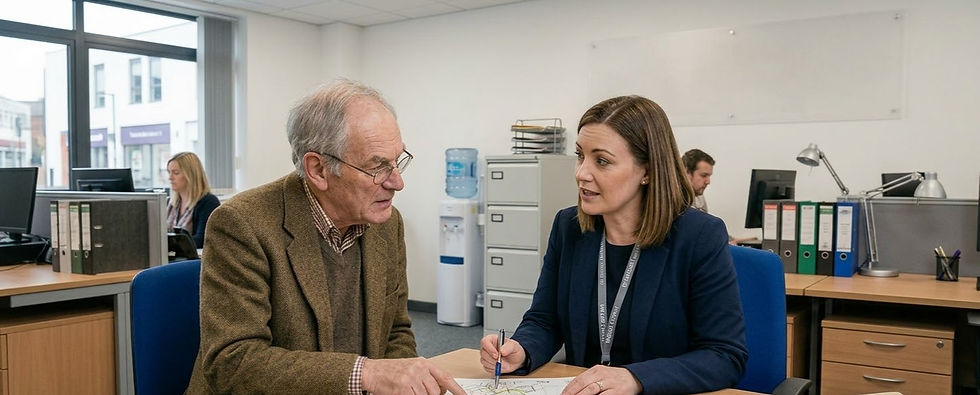
How early conversations with planners and specialists shape the outcome of many proposals.
Many people assume the planning process begins when the application is submitted.
The drawings are uploaded. The reports are filed. The council begins its assessment.
In reality, the most important moment in many planning applications happens much earlier.
It happens before the application exists at all.
Experienced applicants often spend time quietly speaking to the people who will later be asked to comment on the proposal. Those early conversations can shape the entire course of the application.
What Happens After an Application Is Submitted
Once an application enters the planning system, a structured process begins. The planning officer normally sends the proposal to a range of specialist consultees.
These may include:
highways engineers
conservation officers
tree officers
drainage engineers
environmental health officers
ecologists
police crime prevention advisers
Each of these specialists reviews the proposal from their own perspective.
They may recommend approval, request changes or raise objections.
Those responses heavily influence the final decision.
The Planning Officer Rarely Overrides Specialists
Planning officers coordinate the process, but they rarely challenge the technical judgement of specialists. If the highways authority objects to a proposal on safety grounds, the planning officer is unlikely to disagree.
If the conservation officer raises concerns about a listed building, the officer will usually follow that advice. For that reason the views of consultees carry significant weight.
Early Conversations Reduce Uncertainty
This is where pre-application discussions become valuable. If potential issues are discussed early, proposals can be adjusted before the application is formally submitted.
For example:
a highways engineer may suggest improvements to site access
a tree officer may identify root protection areas that need to be avoided
a conservation officer may recommend materials or design changes
By the time the application is submitted, those issues may already have been addressed. This makes the formal consultation process much smoother.
Many Planning Authorities Encourage Pre-Application Advice
Most councils offer some form of pre-application advice service. Most councils now charge for this service and also use it as a delaying tactic.
Applicants can submit outline proposals and receive comments before committing to a full application. These discussions are not binding decisions, but they often provide useful guidance about potential issues.
For complex or sensitive sites, this stage can be extremely helpful.
Historic Buildings Particularly Benefit from Early Discussion
Where heritage buildings are involved, early engagement is especially valuable.
Historic sites often raise questions about:
design approach
materials
repair techniques
impact on historic fabric
the setting of the building
Discussing these matters in advance allows conservation officers to explain what they will be looking for.
Applicants can then incorporate that guidance into the design.
Avoiding Surprises
One of the biggest advantages of early conversations is that they reduce surprises.
When applications arrive without prior discussion, consultees sometimes discover issues that could have been resolved easily at an earlier stage.
Those issues can then lead to:
requests for further information
amended drawings
delays in decision-making
Early dialogue often prevents these situations.
The Reality of the Planning Process
The planning system may appear formal and procedural, but it is also shaped by professional judgement and communication.
When applicants understand how the system works, they often find that planning becomes more predictable.
Speaking to the right people early does not guarantee approval.
But it can help ensure that the proposal addresses the issues that the planning authority will eventually consider.
A Simple Insight
The formal planning decision may appear on a single document issued weeks after the application is submitted.
But by that stage many of the important issues have already been identified and discussed.
In practice, the groundwork for that decision is often laid much earlier. Sometimes over a conversation about drawings that have not yet been submitted.

